Cord Ladders or Tape Ladders? A Small Detail That Changes the Look of Your Blinds
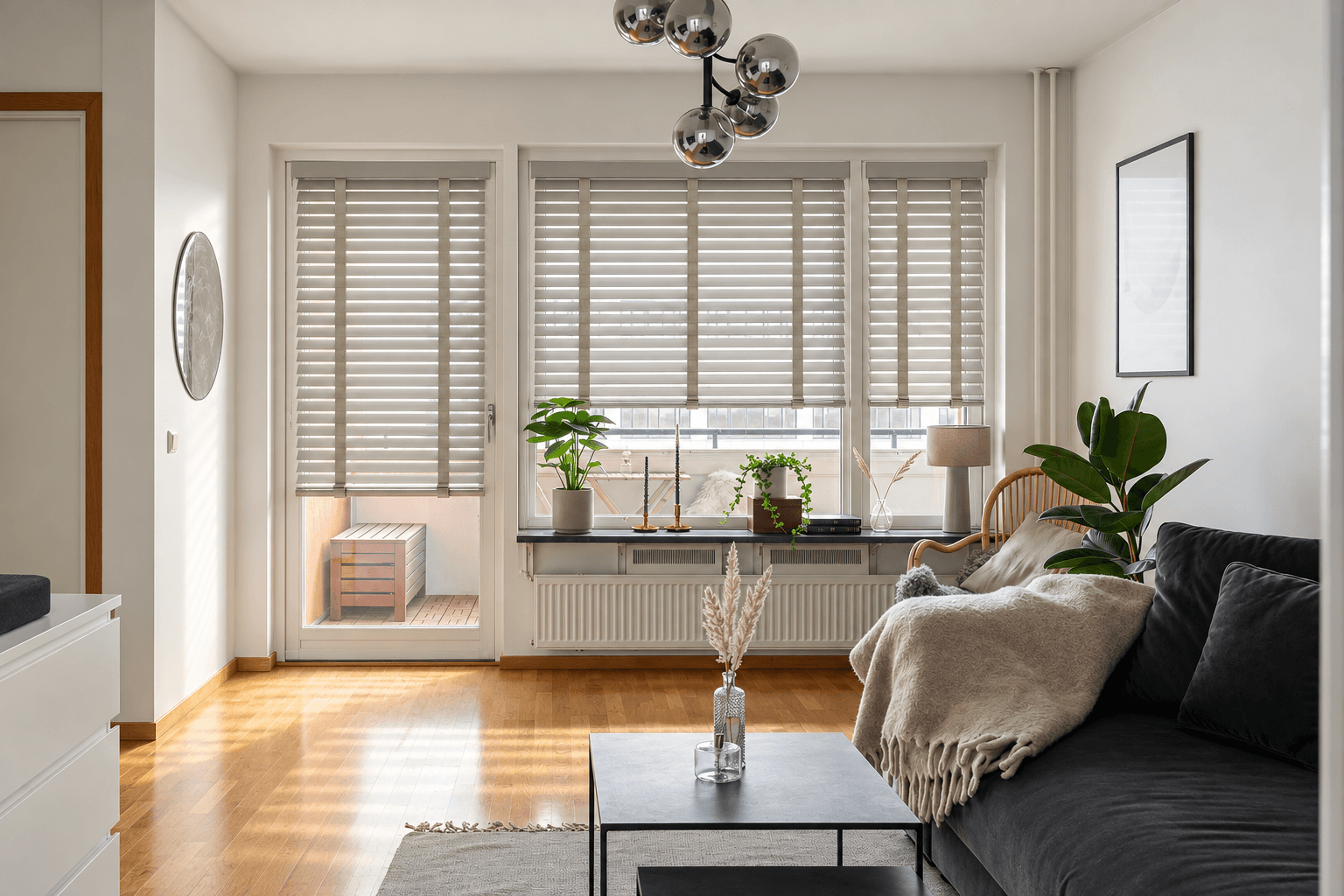
When choosing blinds, we usually pay the most attention to the colour, material and width of the slats. However, there is another element that can significantly influence the appearance of the finished blind – the ladders.
These are the vertical elements running along the full height of the blind. They support the slats, keep them in the correct position and allow their angle to be adjusted.
Depending on the model, you can choose between a cord ladder and a 25 mm tape ladder. Both serve the same basic purpose, but create a very different visual effect.
Cord ladders – subtle and versatile
A cord ladder is made from thin cords that form a structure supporting the individual slats.
It is delicate and discreet, allowing the focus to remain on the slats themselves – their colour, material and texture. It is a great choice for interiors where you want the blinds to have a clean, light and minimalist appearance.
Cord ladders are available for all blind models.
25 mm tape ladders – a more decorative look
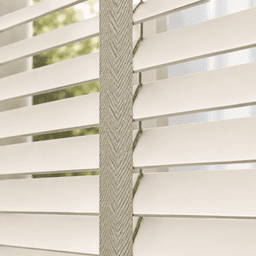
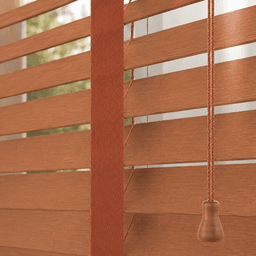
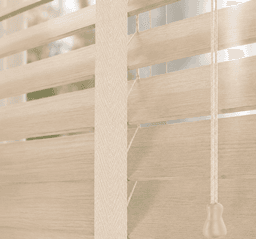
In this version, the visible part of the ladder is a 25 mm wide textile tape.
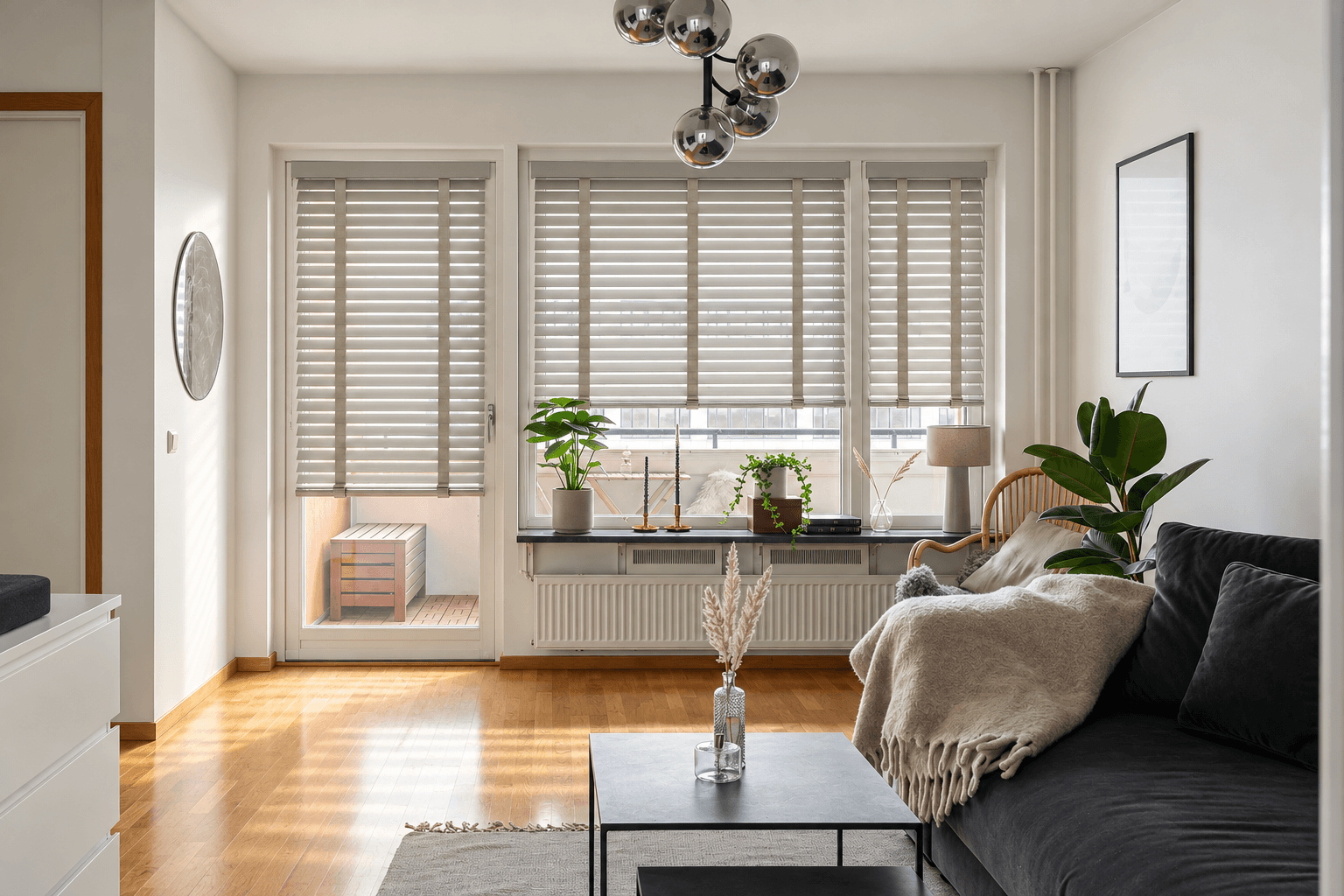
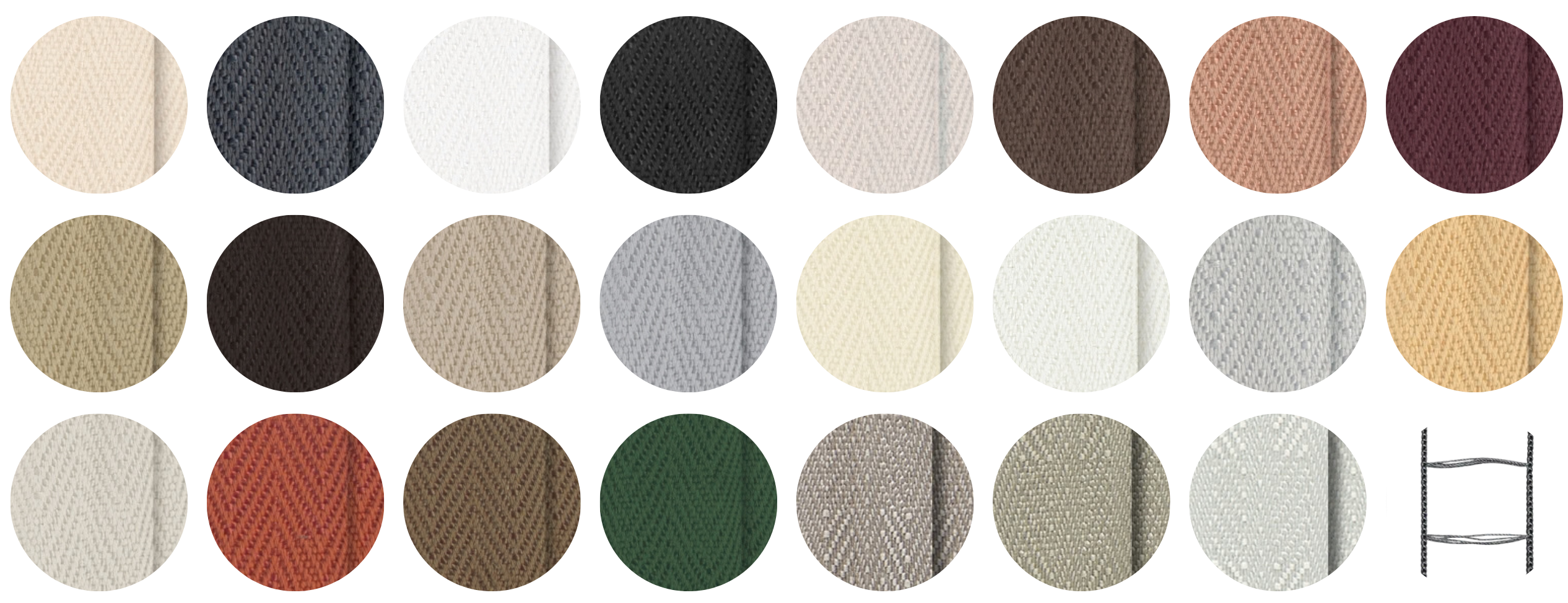
The tapes create distinct vertical lines across the blind and become an important part of its design. They can blend harmoniously with the colour of the slats or provide a stronger, contrasting accent.
Because of their width, tapes are much more noticeable than cord ladders. Their colour and appearance should therefore be considered as part of the overall design, just like the colour and type of slats.
25 mm tape ladders are available exclusively for blind models with 50 mm slats.

How many ladders will my blind have?
The number of ladders depends on the width and specific model of the blind. The wider the blind, the more support points the slats require.
There is therefore no single fixed number of ladders for every blind.
For example, for the ZS 50 model, the number of ladders changes with the width as follows:
Blind width | Number of ladders |
|---|---|
400–1099 mm | 2 |
1100–1899 mm | 3 |
1900–2699 mm | 4 |
2700–4200 mm | 6 |
The width ranges may differ between models. For example, the ZDR 50 uses 3 ladders from a width of 900 mm, 4 from 1600 mm and 6 from 2200 mm.
This means that the number of ladders is always determined by the specific blind model and its dimensions.
Why does the number of ladders matter?
With cord ladders, the difference is relatively subtle because the cords themselves are thin.
It becomes much more noticeable when choosing tape ladders. Two vertical tapes on a small blind create a very different visual effect from four, six or seven tapes across a large window.
For wider blinds, it is therefore worth considering not only the colour of the tape but also the number of ladders required for the selected width.
You can find the number of ladders for your selected model and width in the blind specification.
Cord ladder or tape ladder – which should you choose?
The choice mainly depends on the look you want to achieve.
A cord ladder is discreet and allows the slats themselves to remain the main visual feature. It is a good choice if you prefer a simple, light and understated appearance.
A 25 mm tape ladder is much more visible and decorative. It emphasises the vertical rhythm of the blind and can become a distinctive element of the overall interior design.
It is also worth remembering their availability: cord ladders can be selected for every blind model, while 25 mm tape ladders are available exclusively for models with 50 mm slats.
A small detail that makes a big difference
Ladders are a functional part of the blind, but they can have a surprisingly strong influence on its appearance – particularly on wider blinds and when tape ladders are selected.
When configuring your blinds, it is therefore worth considering three things: the type of ladder, its colour and the number of ladders required for the width of your blind.
This will give you a much better idea of how the finished blind will look on your window.
Related articles
Learn how Child Safety solutions improve children's safety when using blinds and why compliance with the EN 13120 standard matters.
Which blinds work best in bathrooms and kitchens? Discover when to choose aluminium Venetian blinds or Standard pleated blinds and what to consider before buying.